
HemaSense
AI-assisted healthcare keeps gaining ground in medtech. Machine-learning models have become robust and affordable enough to raise the standard of care—monitoring bodily functions, increasing surgical precision, detecting issues earlier. HemaSense, led by CEO Nathan Friedman, applies these technologies to post-surgical monitoring.
Millions of surgeries use the femoral artery as a conduit to reach the surgical site. A small incision is made in the leg over the artery, another cut into the artery, and tools are guided through the vessel to reach the targeted surgical site, like a heart valve.
One in ten of those patients will bleed at the femoral incision. This complication adds more than two days to the hospital stay and $18k to costs on average. It's not a desirable outcome for the patient either.
HemaSense provides an early warning system for subcutaneous bleeding after surgery. The measurement patch is noninvasive, like an EKG electrode. By detecting subcutaneous bleeding early, HemaSense cuts potential expenses by more than half while improving the patient experience.
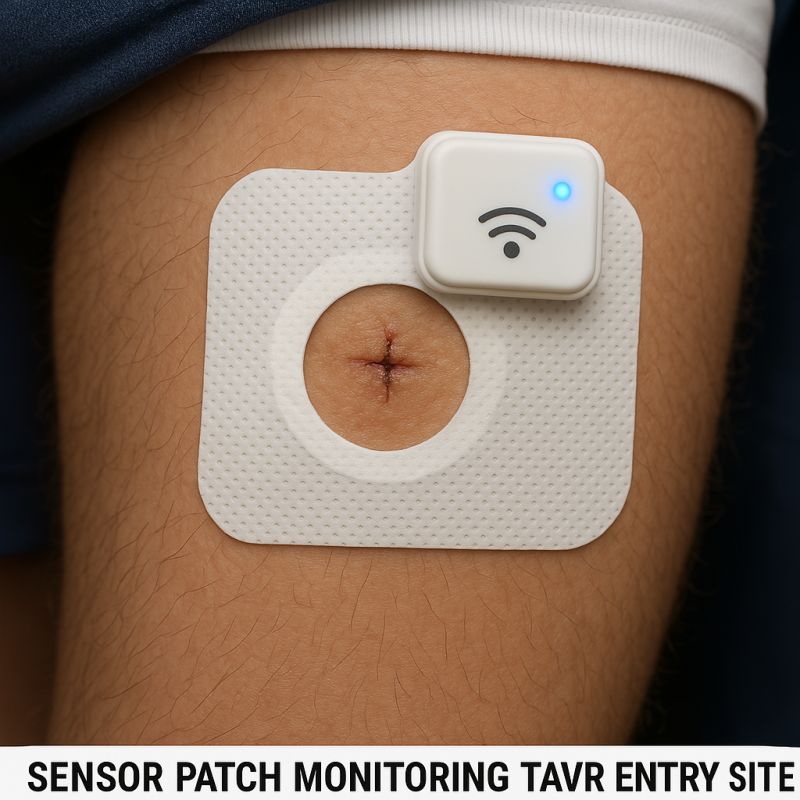
The principles behind HemaSense make sense. The presence of excess subcutaneous blood below the patch changes the impedance, which is measured by electrical signals sent through the tissue below the patch. A machine learning model monitors changes in those signals, and alerts the clinical care team if the vessel incision is bleeding.
This technology looks clever; I'm a big fan of non-invasive monitoring, especially tools that make it difficult to overlook serious problems. HemaSense makes a hidden problem visible.
Nathan presented From Idea to Impact: Prioritizing in Early MedTech R&D at the MedTech Summit, using HemaSense as a case study for his framework on prioritizing uncertainties and tackling "death blow" risks first.
More MedTech profiles
- Altheia — unifying fragmented patient health data
- Study Connect — connecting researchers and clinicians
- Pivotal Healthcare — house calls and telemedicine
Disclaimer 1: The attached image is AI-generated, NOT their product. Disclaimer 2: I have no inside knowledge or involvement with this company.